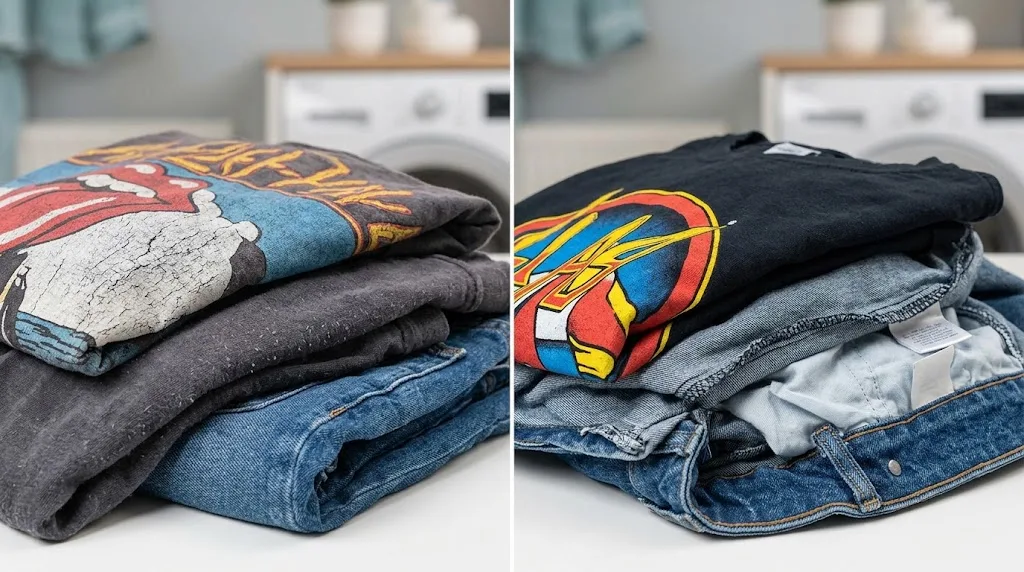
There are two kinds of people when laundry day comes around. Some throw everything into the washing machine exactly as it came off. Others turn shirts, jeans and workout clothes inside out before they go anywhere near the drum.
The second group isn't just following an old laundry superstition.
Washing clothes inside out can help protect the visible outside of a garment, particularly when the fabric is prone to fading, pilling or surface wear. It can also protect printed designs and other decorations from some of the friction they experience during washing.
But it isn't a magic setting for the washing machine, and you don't need to turn every piece of clothing inside out before every wash.
What matters is what you are trying to protect, and where the dirt is.
Why turning a shirt inside out can protect it
A washing machine cleans clothes partly through movement. Clothes tumble, rub against one another and come into contact with the drum as water and detergent move through the load.
That mechanical action is useful because it helps loosen soil. It can also wear on fabric over time.
Turning a garment inside out doesn't remove that friction. It changes where some of it happens.
If a printed T-shirt goes into the machine right-side out, the printed surface is exposed to rubbing against other garments and the machine. Turn it inside out, and that printed surface is now on the inside of the garment.
The fabric is still being washed. It is still moving around. But the surface you care about seeing when you wear the shirt is less exposed to direct contact with other items.
Whirlpool specifically recommends inside-out washing as a way to reduce pilling, protect decorative designs and help limit fading caused by agitation.
That is the basic reason the trick can work.
It isn't about making the washer gentler.
It is about changing which side of the fabric takes the friction.
What happens to clothes during a wash?
Clothing doesn't simply sit in a bath of detergent.
During a machine wash, several things are happening at once. Water and detergent move through the fabric while the garments are repeatedly flexed, rubbed and agitated.
That movement helps remove dirt, but repeated mechanical action can also affect the surface of the fabric.
Pilling is one example.
Pills form when loose fibers work their way toward the surface and become tangled together. Friction from normal wear can contribute to this, and washing can make an existing pilling problem worse. Whirlpool recommends turning garments inside out as one way to reduce the amount of friction experienced by the visible surface.
Fading is another issue, although it is more complicated.
Dyes can gradually lose intensity through repeated washing, heat, chemicals and mechanical wear. Turning a garment inside out doesn't stop those processes. It simply gives the visible side some protection from the mechanical part of the damage.
That distinction matters.
Inside-out washing is not a way to make a garment immune to fading. It is one small way of reducing some of the wear that contributes to a garment looking older.
Does washing clothes inside out prevent fading?
It can help, particularly with dark or strongly colored clothing, but it shouldn't be treated as the only thing responsible for fading.
Dark clothes and denim are commonly recommended candidates for inside-out washing because the visible surface is exposed to repeated agitation during laundering. Whirlpool specifically recommends washing jeans inside out to help protect the outer fibers from friction and direct detergent exposure.
The washing temperature also matters.
Heat can contribute to color loss and fabric damage, so turning a garment inside out while continuing to wash it on a harsh, hot cycle isn't equivalent to using a gentler wash.
Drying matters too.
If you hang dark clothing in strong sunlight, turning it inside out can protect the visible surface from direct light. The American Cleaning Institute has noted that dark garments can fade with repeated exposure to sunlight and heat and recommends following the garment's drying instructions.
So if a black shirt is fading, there isn't one single culprit to blame.
Washing frequency, water temperature, detergent, mechanical agitation, drying heat and sunlight can all matter.
Inside-out washing deals with only part of that process.
What about printed T-shirts?
This is one of the situations where the advice makes the most sense.
A printed shirt has something sitting on the surface of the fabric that can be affected by repeated rubbing.
Screen prints, transfers, embroidery and other decorative elements can be more vulnerable to abrasion than the ordinary fabric around them. Whirlpool recommends turning garments with decorative designs inside out to reduce direct friction during washing.
The same basic principle applies to embroidered clothing and garments with other surface decorations.
You aren't trying to clean the print.
You're trying to clean the shirt without making the printed or decorated surface take unnecessary punishment.
For especially delicate decorations, a mesh laundry bag may provide additional protection. Turning a garment inside out isn't a substitute when the care instructions specifically call for a laundry bag or another washing method.
Does it reduce pilling?
It can help protect the outside of a garment from the friction that encourages visible pilling.
But there is an important distinction.
Turning a sweater inside out does not stop the fibers from rubbing.
It changes which surface is exposed to that rubbing.
That can make a difference to how the garment looks because pills forming on the inside are less noticeable than pills covering the outside.
The effect also depends heavily on the fabric itself. Some fabrics and yarn constructions are much more prone to pilling than others, and everyday wear can create friction even when the garment never goes near a washing machine.
So if a shirt pills easily, turning it inside out is useful, but it isn't a cure for the underlying tendency of the fabric to pill.
Does washing inside out make clothes cleaner?
This is where the answer gets more interesting.
For most ordinary laundry, turning a garment inside out is not necessary to make the entire garment clean.
But it can make sense when the inside is the part carrying most of the soil.
Think about a T-shirt.
The inside is against your skin. Over time it can collect sweat, body oils, deodorant residue and other substances from your skin.
Activewear has the same issue. So do socks and underwear.
When those garments are turned inside out, the side that has been in direct contact with your body is more exposed during the wash.
Whirlpool recommends inside-out washing for some garments that collect sweat, body oils and odors on their inner surfaces.
That doesn't mean the washing machine somehow refuses to clean a garment unless it is inside out.
Detergent and water still move through the fabric.
It simply means that orientation can sometimes make sense when you are deliberately putting the more heavily soiled surface outward.
There is one obvious exception.
If the outside of your shirt is covered in mud, food, makeup or another visible stain, leaving that dirty surface inside the garment isn't necessarily helpful. Pretreat the stain and follow the care instructions rather than turning the garment inside out automatically.
Whirlpool also recommends pretreating noticeable stains before washing inside out.
A useful rule is:
Protect the outside when the outside is the part you care about. Expose the dirty side when that side needs the most cleaning.
Should you wash jeans inside out?
Jeans are a good candidate.
Denim can lose color through repeated washing, and the outside of a pair of jeans is the part most people want to keep looking good.
Whirlpool recommends turning jeans inside out and washing them on an appropriate cycle, particularly when preserving the color of denim is a concern.
New dark denim can also release dye, so turning it inside out doesn't replace sorting it appropriately or following the garment's care instructions.
The same principle applies to black jeans.
If the goal is to keep the visible surface looking darker for longer, reducing unnecessary abrasion on that surface makes sense.
What about underwear?
Underwear is slightly different because cleanliness becomes a bigger part of the equation.
The inside is normally the side that has the most direct contact with the body, so turning underwear inside out can expose sweat, body oils and other residue more directly during washing.
Some underwear-care instructions specifically recommend washing inside out.
But there is no reason to treat inside-out washing as a substitute for proper washing temperature, detergent, stain treatment or the garment's care instructions.
And if the outside is visibly soiled, that changes the calculation.
Again, it comes down to which surface needs attention.
Does inside-out washing prevent lint?
It can help keep lint and surface debris from being as noticeable on the outside.
That is different from preventing lint from existing.
Lint will still be produced by friction between fibers and garments. Turning a dark shirt inside out doesn't stop another garment from shedding fibers into the wash.
It simply means that some of what ends up on the fabric may be on the inside rather than the surface you see.
This is another example of what inside-out washing actually does.
It doesn't eliminate the process.
It changes where the effects show up.
Does drying inside out matter too?
Yes, particularly if you're drying clothes outdoors.
Washing isn't the only time clothing is exposed to things that can affect its appearance.
Sunlight can fade dyes, and prolonged exposure is particularly noticeable on dark or strongly colored garments. Turning clothes inside out while drying can keep the visible surface facing away from direct sunlight.
A dryer creates a different problem.
There is heat and mechanical tumbling, both of which can contribute to wear depending on the garment and drying setting.
Whirlpool notes that drying some garments inside out can help reduce visible fading and lint on the outside during tumble drying.
So if someone is turning their clothes inside out before washing but then drying delicate or dark clothing on an unnecessarily hot setting, they may be protecting one part of the process while being rough on the garment somewhere else.
Do you need to turn everything inside out?
No.
There is no universal requirement that every garment must be turned inside out.
The strongest cases are garments where the outside appearance matters and where surface friction can cause noticeable damage.
That includes things such as:
- Printed T-shirts
- Dark clothing
- Jeans and dark denim
- Embroidered garments
- Clothes with delicate decorations
- Fabrics prone to pilling
- Activewear
- Some underwear and socks
- Garments where the care label specifically recommends it
Good Housekeeping and Martha Stewart's recent laundry guidance similarly focuses on particular garment types rather than treating inside-out washing as an absolute rule for every load.
Plain towels, sheets and ordinary sturdy garments don't necessarily need the extra step every time.
If the garment has special care instructions, those instructions take priority.
What would a real HIAW test need to measure?
This is where the question becomes much more interesting.
A proper test wouldn't simply wash one shirt inside out and another normally, look at them afterward and decide which one "looks better."
That would be too subjective.
A useful HIAW experiment would start with pairs of identical garments.
One garment would be washed normally. Its identical partner would be washed inside out.
The two would need to receive the same detergent, water temperature, cycle, load conditions, drying method and number of washes.
The experiment would then track several separate outcomes:
| What we measure | What it would tell us |
|---|---|
| Color change | Whether one orientation loses more visible color |
| Print condition | Whether graphics crack, peel or wear differently |
| Pilling | Whether visible surface pills develop at different rates |
| Fabric wear | Whether the surface shows measurable deterioration |
| Lint | Whether more fibers become visible on one side |
| Shape | Whether repeated washing changes the garment differently |
| Surface appearance | Whether the outside actually looks different after repeated cycles |
Ideally, the garments would also be photographed under the same lighting and measured repeatedly rather than judged from memory.
And the experiment should be repeated.
One shirt pair isn't enough to establish a general rule because individual garments vary.
That's the part the current article cannot honestly provide yet.
There are plenty of expert recommendations supporting inside-out washing, but HIAW has not actually performed this controlled comparison here. The distinction matters.
So, does washing clothes inside out really protect them?
Yes, but in a specific way.
Turning a garment inside out can reduce the amount of direct abrasion experienced by the visible outer surface. That can help protect against some of the fading, pilling and surface wear that happens during repeated washing. It can also help protect printed designs, embroidery and other decorations.
It doesn't stop fabric from wearing out.
It doesn't guarantee that colors won't fade.
It doesn't mean every garment needs to be turned inside out.
And it doesn't automatically make a dirty garment cleaner.
The biggest benefit is simple: the side you care about seeing can take less of the punishment.
For a favorite black T-shirt, a printed shirt, a pair of dark jeans or a garment that pills easily, that small change makes practical sense. For ordinary sturdy laundry, the benefit may be small enough that you won't notice a difference.
The advice isn't really about inside versus outside.
It's about understanding what the washing machine is doing to the garment, and deciding which part you want to protect.