A $499 toothbrush sounds excessive until you see what Dyson is trying to build.
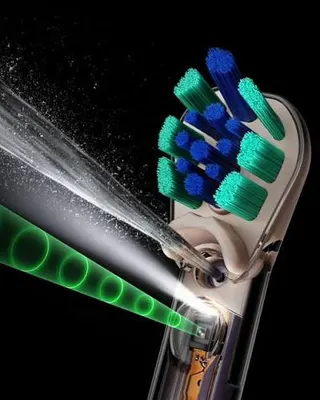
The new Dyson CameraJet isn't just an electric toothbrush. It combines a toothbrush, a camera, software that analyzes your teeth in real time, and a liquid jet that's supposed to clean between them while you brush.
The idea is ambitious enough that many of the first reactions have fallen into two camps.
Some people think it's the future of oral care.
Others think it's an expensive gadget solving a problem that was already solved years ago by floss and water flossers.
Most people searching for the CameraJet seem to be asking a simpler question:
Can this thing actually replace flossing?
After digging through Dyson's claims, clinical testing, and the research on water flossers in general, the answer isn't a straightforward yes or no.
The short version is that CameraJet appears capable of cleaning between teeth without traditional string floss. What's much harder to prove is whether it completely replaces other forms of interdental cleaning for everyone, or whether it delivers enough additional benefit to justify its price.
What the CameraJet Actually Does
One thing that gets lost in a lot of coverage is the role of the camera itself.
The camera isn't cleaning your teeth.
The liquid jet is.
CameraJet includes a 100,000-pixel macro camera built into the brush head. Dyson says its software analyzes images of your teeth in real time, identifies the spaces between them, and automatically directs bursts of mouthrinse toward those areas while you brush.
That's why Dyson refers to the process as precision flossing.
If you've seen headlines calling it a "toothbrush with a camera," that's technically true, but it's also slightly misleading. The camera is really a targeting system. Its purpose is to help the device aim the cleaning jet where it thinks it's needed.
Understanding that distinction changes how you evaluate the product.
The interesting question isn't whether the camera works.
The more important question is whether camera-guided targeting produces meaningfully better cleaning than the tools that already exist.
Is This Basically a Water Flosser?
In many ways, yes.
A traditional toothbrush cleans the surfaces its bristles can physically reach. The areas between teeth are more difficult because there simply isn't much space.
That's why dentists recommend some form of interdental cleaning.
String floss physically scrapes those spaces.
Interdental brushes clean them with tiny bristles.
Water flossers use a pressurized stream of liquid.
CameraJet belongs much closer to the water-flosser category than the traditional floss category.
The difference is that most water flossers require you to manually aim the stream. CameraJet attempts to automate that process using the camera and targeting software.
So when people ask whether Dyson invented a completely new way of cleaning teeth, the answer is probably no.
The underlying cleaning method already exists.
What's new is the automation.
Can Water Flossers Replace Traditional Floss?
This is where the discussion becomes more nuanced than many reviews make it sound.
Water flossers are not a fringe idea. They've been studied for years, and research generally supports them as a legitimate way to clean between teeth and improve gum health.
Recent systematic reviews have found that water flossers can reduce plaque and signs of gum inflammation, particularly for certain groups such as people with braces, dental work, or limited dexterity.
That doesn't mean every study declares water flossers universally superior to string floss. The results are mixed, and different methods appear to have strengths in different situations.
But the broader evidence does support something important.
Cleaning between your teeth doesn't have to mean using traditional string floss.
That's a key point because the CameraJet's entire concept depends on it.
If water-based interdental cleaning didn't work, the product would be dead on arrival.
The good news for Dyson is that the underlying science behind water flossing is generally considered legitimate.
Where the Evidence Gets More Complicated
The strongest claim surrounding CameraJet isn't that it cleans between teeth.
It's that it may allow people to stop flossing separately.
That's a much bigger claim, and the evidence currently available doesn't fully establish it.
Dyson has publicized clinical testing of the CameraJet and reports improvements compared with manual toothbrushing.
That's useful information.
The problem is that most people considering a $499 toothbrush aren't comparing it to a basic manual toothbrush.
They're comparing it to the routine they already have.
Maybe they use a Sonicare.
Maybe they use an Oral-B.
Maybe they already own a Waterpik.
Maybe they brush and floss consistently every day.
Those comparisons matter because they are the real-world alternatives.
A study showing that CameraJet outperforms a manual toothbrush doesn't automatically tell us whether it outperforms a good electric toothbrush combined with effective interdental cleaning.
Those are different questions.
And right now, the publicly available evidence appears much stronger for the first question than the second.
The Strange Study Numbers
While looking through Dyson's product information, another detail stood out.
Different regions appear to reference different clinical studies.
Some public material describes a four-week study involving 71 participants.
Other reporting has referenced a six-week study involving 204 participants.
That doesn't necessarily indicate a problem. There may be multiple studies, expanded trials, or different analyses being referenced.
The issue is simply that the publicly available information doesn't currently provide enough detail to clearly connect all of those numbers.
It's a good reminder that clinical claims can sound more definitive than the evidence that's publicly available to verify them.
Is the CameraJet Better Than a Waterpik?
This may be the most practical question of all.
A Waterpik or similar water flosser already performs interdental cleaning and costs dramatically less.
So what exactly are you paying for?
The camera.
The software.
The automation.
The convenience of combining multiple steps into a single routine.
Whether that's valuable depends heavily on the person using it.
Someone who already owns a water flosser, uses it correctly, and sticks with the habit may not gain much from automated targeting.
Someone who hates using separate devices and regularly skips interdental cleaning might see more value in a system that handles everything at once.
That's why the "worth it" question is so difficult.
It isn't really a technology question.
It's a behavior question.
Is the Camera Just a Gimmick?
I don't think the evidence supports calling it a gimmick.
The camera clearly serves a purpose.
It identifies gaps between teeth and helps direct the liquid jet.
The more relevant question is whether the camera creates a meaningful improvement in oral-health outcomes.
Those are not the same thing.
A feature can be real, functional, and technologically impressive while still delivering only a modest practical benefit.
Many early reviews seem impressed by the engineering. Some reviewers also question whether the benefits justify the price.
Those positions aren't contradictory.
Both can be true at the same time.
Does the CameraJet Make Floss Obsolete?
Not based on the evidence available today.
What we can say with reasonable confidence is that CameraJet performs interdental cleaning using a targeted liquid jet, and the broader research on water flossers supports that approach as a legitimate method of cleaning between teeth.
What we cannot confidently say is that everyone can throw away their floss because a camera has been added to a toothbrush.
Mouths aren't identical.
Tooth spacing varies.
Braces change things.
Dental restorations change things.
Gum health varies from person to person.
A tool that works exceptionally well for one person may not be the ideal solution for another.
That's one reason dental professionals rarely reduce oral care to a single universal method.
So What's the Honest Verdict?
The most interesting thing about the CameraJet may not be the camera at all.
It's the attempt to merge several habits into one device.
Most people already know they should clean between their teeth. The challenge isn't usually information. It's consistency.
A toothbrush that brushes, identifies gaps, and performs targeted interdental cleaning in a single routine could be genuinely useful if it helps people stick with better habits.
What remains unclear is whether that convenience translates into dramatically better long-term outcomes than the tools already available.
The technology appears real.
The cleaning method has scientific support behind it.
The clinical testing is legitimate, although the publicly available evidence still leaves important questions unanswered.
What hasn't been established is that a $499 camera-guided toothbrush fundamentally changes what we know about oral care.
For now, the CameraJet looks less like a replacement for every existing cleaning method and more like a sophisticated new way of performing one that already exists.
That's still an impressive achievement.
It's just not the same thing as proving floss has become obsolete.